


Vogue World Milano: When the City Became the Runway
Updated: Oct 8
On 22 September 2026, Vogue World transformed Milan’s Galleria Vittorio Emanuele II into a stage for a larger proposition about Italian fashion. The setting mattered. A passage between the Duomo and La Scala, lined with shops and civic memory, became part of the show’s argument: the country’s creative authority is made through places, people, objects and industry together.
Vogue’s production moved through five acts, from artisanal and industrial revolutions to Made in Italy, intelligent textiles and imagination. The sequence offered a history of changing methods rather than a conventional forecast of next season’s hemlines. Craft was its central character, yet the presence of technology prevented heritage from becoming a museum display.
Who gets to represent Made in Italy?
The show opened with craftspeople and objects including a model of the Duomo, a celestial globe and a loom. That choice pushed the makers into view before the familiar machinery of celebrity and red carpet coverage took over. Vogue described the artisans’ role and its collaboration with Teatro alla Scala; the event was also staged with public and industry patronage. These are distinct kinds of participation, and they should not be flattened into a single image of national style.
The five-act narrative carried an editorial risk. No spectacle can adequately represent every region, workshop or contemporary designer in Italy. A central Milanese monument is a persuasive frame, but it can also make the country’s dispersed production network look more unified and glamorous than daily working conditions allow. That tension is useful: it asks which craftspeople gain visibility, who develops a business after the cameras leave and how a younger generation enters the story.

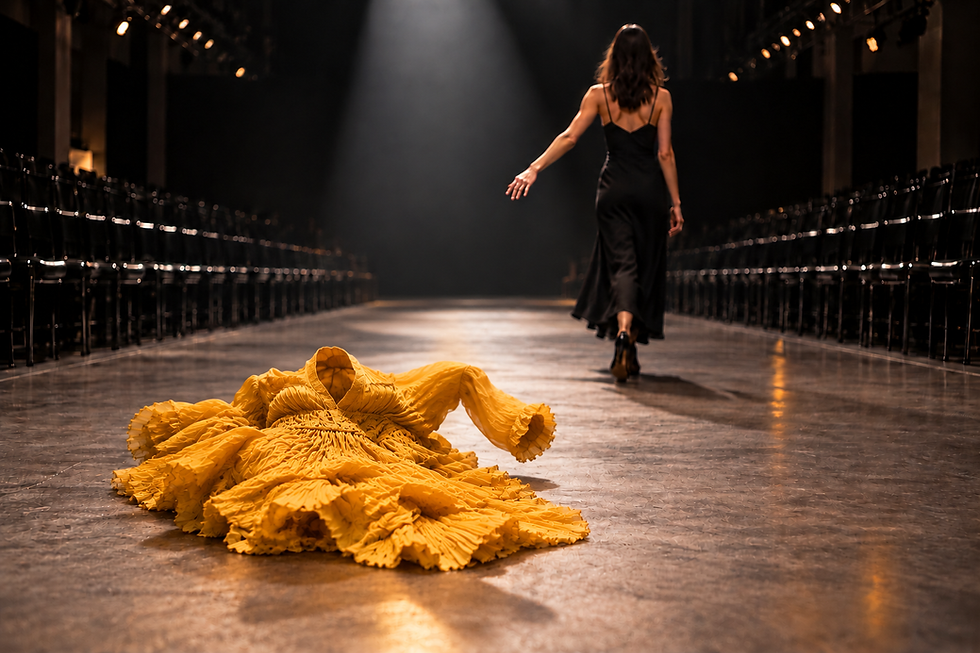
Conceptual editorial image created for NEXT UP; it does not document Vogue World Milano.
The Galleria as an editorial instrument
As a multi-house editorial production, Vogue World combined archival, current and custom fashion with performance and historical references. The Galleria supplied continuity between commercial luxury, public architecture and cultural ceremony. In an era when a show must travel instantly across screens, a recognisable physical setting can make the images legible around the world.
The more durable value is harder to measure. A viral frame can reinforce Milan’s fashion identity; sustaining an atelier or an emerging label requires relationships, access and orders. The next question for a fashion capital is how international attention connects to skills, production and customers. Vogue World gave the city a striking image of its past and possible future. What Milan does with the connections behind that image is the story that follows.

Conceptual editorial image created for NEXT UP; it does not document Vogue World Milano.
Sources and editorial note
Vogue, “What Is Vogue World: Milano? A Look at the Fashion and Craftsmanship Behind the Show”: https://www.vogue.com/article/what-is-vogue-world-milan-2026-09-22 . Vogue Italia, event and location coverage: https://www.vogue.it/gallery/vogue-world-2026-milano-red-carpet-look . The questions about representation, access and durable value are NextUp’s analysis.


Comments